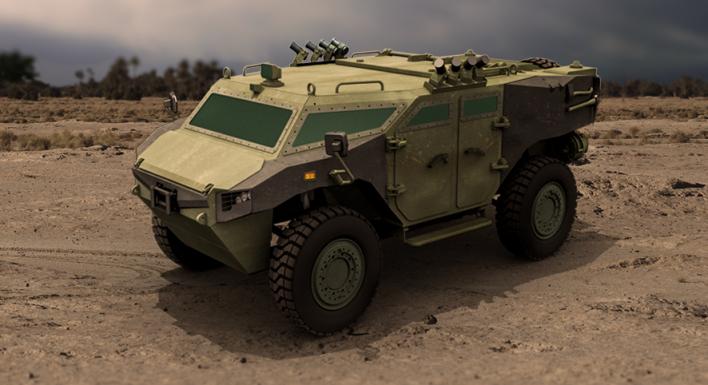
 Jane’s is reporting that Turkish defense firm FNSS has unveiled a new 4×4 AFV at the IDEF defense exhibition in Istanbul. The vehicle is called the Pars 4×4 and has been designed to fulfill the wheeled component of the Turkish Land Forces’ Anti-Tank Vehicle requirement. The cab of the vehicle is protected against chemical, biological, radiological, and nuclear (CBRN) threats. According to Jane’s, the vehicle displayed at IDEF was armed with an Aselsan SARP remote-controlled turret (RCT) equipped with a 12.7 mm H2 Browning machine gun. Company officials said that the Pars 4×4 can also be armed with a range of different unmanned turret options, including an RCT armed with anti-tank guided weapons (ATGWs) or an RCT armed with a 20 mm or 25 mm automatic cannon.
Pars 4×4 vehicle displayed at IDEF 2015
New Russian AFVs revealed to public
Images of the Russian T-14 Armata tank were revealed earlier this week. The photos and video come from night rehearsals for the upcoming May 9 Victory Day Parade in Moscow. Images of the Armata and other new Russian AFVs had been circulating for the past month, but these vehicles had tarps over their turrets. The new photos released this week have the turrets exposed. The images released thus far include the T-14 Armata, the Boomerang APC, Kurganets-25 IFV, Koalitsiya-SV SPG, Kurganets-25 APC, and Kornet-D anti-tank vehicle.
Photo Galleries (collected from various online forums)
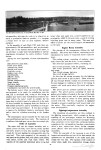
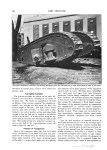
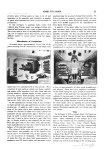
From the Vault: Ordnance article on Mark VIII tank
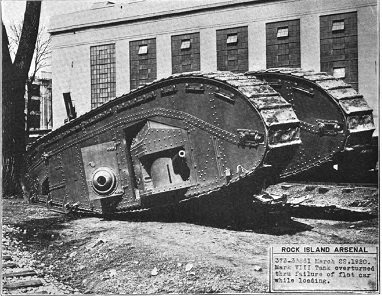 Today we present an article from The 1920 July-August issue of Ordnance magazine on the “Manufacture of Mark VIII tanks at the Rock Island Arsenal” by Harry B. Jordan. The article describes the construction of these vehicles, one of the very first tanks assembled in the United States. For those interested in the technical details of these early tanks, this article should prove illuminating. There is also a somewhat amusing photo in the article of a Mark VIII that flipped upside down during a loading accident.
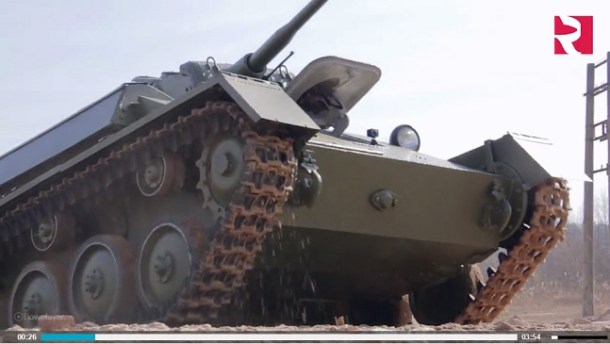
Video of T-70M light tank restoration
Russia Beyond the Headlines has posted a video of a restored WW2 era Soviet T-70M light tank. The video is in Russian, but English subtitles are provided. This particular vehicle resides in Pskov, Russia.
From the Vault: US report on Japanese tank and antitank warfare
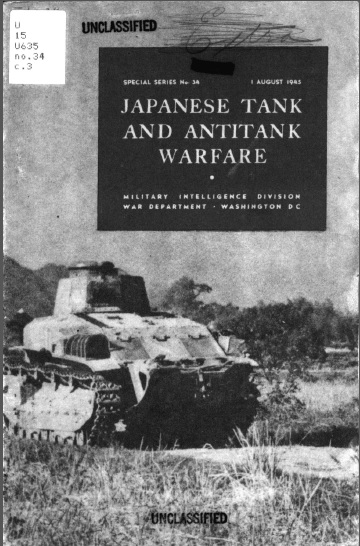 Today we present a link to a PDF of the US report “Japanese tank and antitank warfare, Special Series no. 34.” This document was released on August 1, 1945 and was intended to replace several earlier reports on Japanese tanks and antitank weapons and methods. Unfortunately the reproduction of the document is not perfect, the text is easily readable but some of the pictures are a bit hard to see. However, there is much in this report that will be of interest to those curious about Japanese armor. Vehicle descriptions are provided, as well as descriptions of all the known guns which equipped Japanese tanks. Japanese armored tactics and organization are also addressed in this report, as well as antitank equipment and tactics.
Israel Military Industries unveils HE-MP-T 120mm round
 The Jerusalem Post is reporting that IMI (Israel Military Industries) is to display this week a tank shell that was first used operationally during last summer’s Gaza conflict, and which has been selected by a number of international military forces for urban operations. The tank shell, designated, the M339, is set to be displayed at the Ground Forces Conference organized by Israel Defense magazine in Latrun. According to the article, the M339 round was first used operationally during Operation Protective Edge last summer in Gaza. IMI claims that the M339 enables “main battle tanks to participate in urban warfare without causing excessive collateral damage.” The M399 is described as High Explosive, Multi-Purpose Tracer (HE-MP-T), the shell was designed jointly with the Defense Ministry’s Merkava Development Administration and the IDF Ground Forces.
The Tank-Infantry Battle of Munoz, Philippines by Harry Yeide
 The Chieftain’s Hatch section of the World of Tanks website has posted an article on the Tank-Infantry Battle of Munoz, Philippines by guest writer Harry Yeide. Mr. Yeide is the author of several books on US armored forces in WW2, including The Infantry’s Armor, The Tank Killers, and Steeds of Steel. Earlier this year we published an interview with Mr. Yeide.
Excerpt:
General Douglas MacArthur intended to invade Luzon, the Philippine Islands, right where the Japanese had conducted their main landings in 1941, and for the same reason: The Lingayen Gulf provided direct access to the central plains and Manila. He gave the task to Lieutenant General Krueger and his Sixth Army, supported by the air and naval forces of the Southwest Pacific Area. Once ashore, Sixth Army’s I Corps was to protect the beachhead’s left flank while XIV Corps drove south to Clark Field and then Manila.
General Tomoyuki Yamashita, the Japanese commanding general, did not intend to defend the central plains-Manila Bay area with his 260,000 troops because American superiority in armor and mobility would have its greatest advantage there. He sought only to pin down MacArthur’s forces in order to delay Allied progress toward Japan.
U.S. Tanks perform live-fire demonstration in Estonia
The U.S. Government DVIDS website has release video showing US tank crews performing a live-fire demonstration in Estonia. US forces have deployed heavy forces to the Baltic states in response to the increasing tension between Russia and its NATO neighbors.
These live-fire demonstrations are described in a story from the DVIDS website written by a U.S. public affairs officer.
During the demonstration, the tank commanders’ orders and guidance could be heard from a live radio feed playing over the loud speakers. The crowd watched in awe as the 3rd ID tank platoon fired its M256A1, 120 mm smoothbore gun, performed a bounding over watch approach and eliminated a simulated target.
“The firepower of these tanks was very impressive and certainly carries the message that it’s a formidable weapon,” said Levine.


WoT History Articles translated to English
At the Russian language World of Tanks website, they frequently publish articles on the history of various tanks and vehicles written by their staff of researchers. Fortunately for English language readers, the Archive Awareness blog regularly translates and posts these articles. April saw a good number of these translated articles posted online. Here are some links to the most recent ones.
World of Tanks History Section: SOMUA S35
World of Tanks History Section: Infantry’s Fangs (anti-tank rifles)
World of Tanks History Section: Tanks in the Far East
Book Alert: The History of the Panzerwaffe Volume 1: 1939-1943
 Amazon is listing a October 20, 2015 release date for the upcoming book “The History of the Panzerwaffe Volume 1: 1939-1943 by Thomas Anderson. Published by Osprey, the book is listed as having 304 pages and is in hardcover. In regards to books on armor, Osprey is primarily known for their “New Vanguard” series of slender soft cover books. Over the past few years Osprey has published several hardcover books on armor as well, all of them focusing on German WW2 panzers.
Publishers Description:
This is the definitive history of the evolution of the feared German Panzerwaffe, from its earliest beginings to the height of its success. With rare and revealing combat reports and photographs sourced from previously unseen private and archival collections, it uncovers the technical and operational stories of the formidable armored beasts that formed the backbone of the German war machine–tanks such as the Panzer I, II and 38(t).
The Germans transformed armored warfare from a lumbering and ponderous experiment in World War I, into something that could decide the outcome of conflicts. This technical and operational history is the definitive guide to the legendary Panzerwaffe, from its very infancy to the days when it made Europe its garden path at the height of Nazi German power.

 Tank and AFV News