Here is a two minute video excerpt from the TV show “Strange Inheritance” featuring the restored WW2 German Panther tank owned by the late Jacques Littlefield. This vehicle is part of the collection that now belongs to the Collings Foundation.
News for all things related to Tanks and Armored Fighting Vehicles
Here is a two minute video excerpt from the TV show “Strange Inheritance” featuring the restored WW2 German Panther tank owned by the late Jacques Littlefield. This vehicle is part of the collection that now belongs to the Collings Foundation.
 Arabian Business.com has posted an article stating that German company Krauss-Maffei Wegmann (KMW) wants to export over 70 Leopard tanks to Oman. The article notes that this story was originally reported in German language magazine Der Spiegel, which notes that KMW and a Turkish competitor to submit bids for a contract worth more than 2 billion dollars. Der Spiegel said the Federal Security Council, the German body that monitors the export of military goods, had given KMW a temporary export licence for a Leopard tank for a test in Oman.
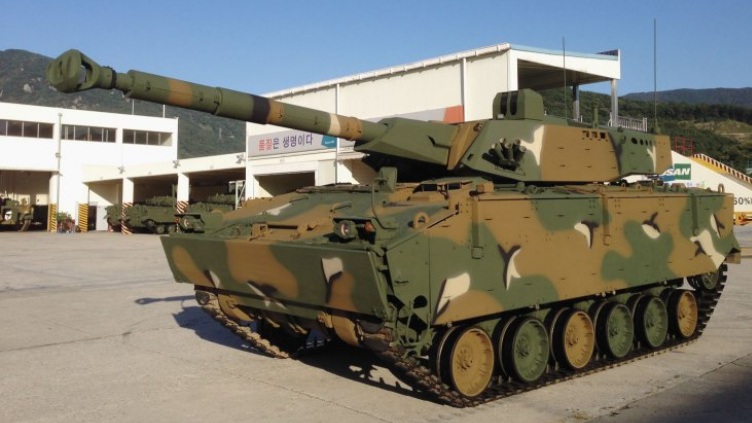
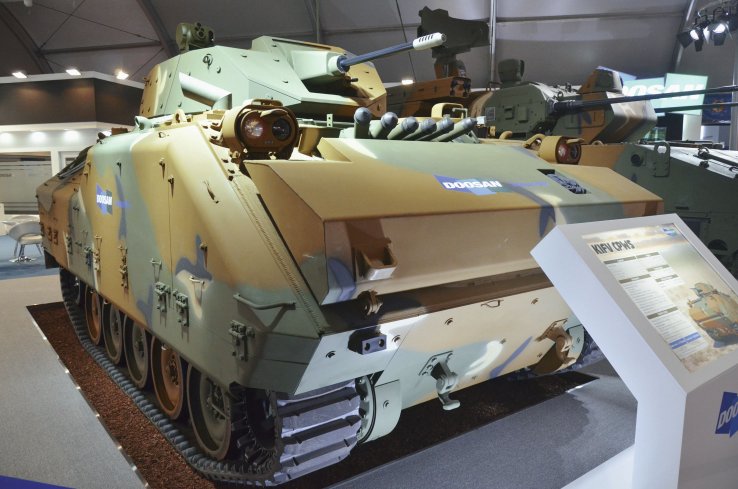
Jane’s is reporting that the South Korean K200 Infantry fighting vehicle (KIFV) developed by Doosan DST is getting a big boost in firepower in the form of a Belgian CMI Defense Cockerill Protected Weapon Station (CPWS.) The first example displayed of the CPWS on a KIFV was equipped with a Orbital ATK 30mm cannon. Varients of the KIFV have had turret mounted guns of 20mm-30mm in the past, but these were manned turrets that took up valuable interior crew space, unlike the remote weapons station CPWS. Also shown in the article is a mock up of a South Korean K21 NIFV fitted with CMI turret mounting a 105mm rifled cannon. The K21 is an IFV intended to replace the KIFV as the front line South Korean Infantry Fighting Vehicle.
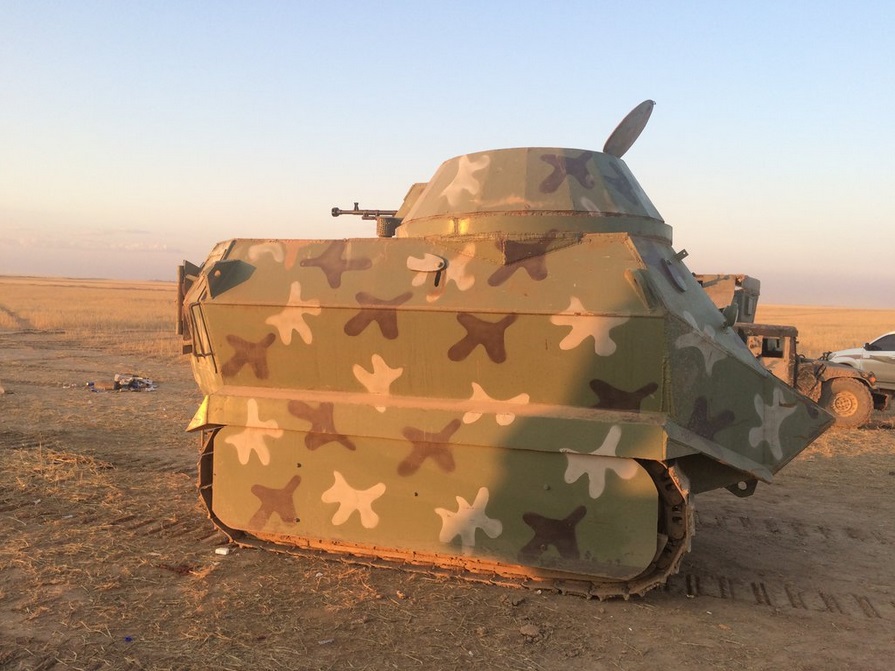
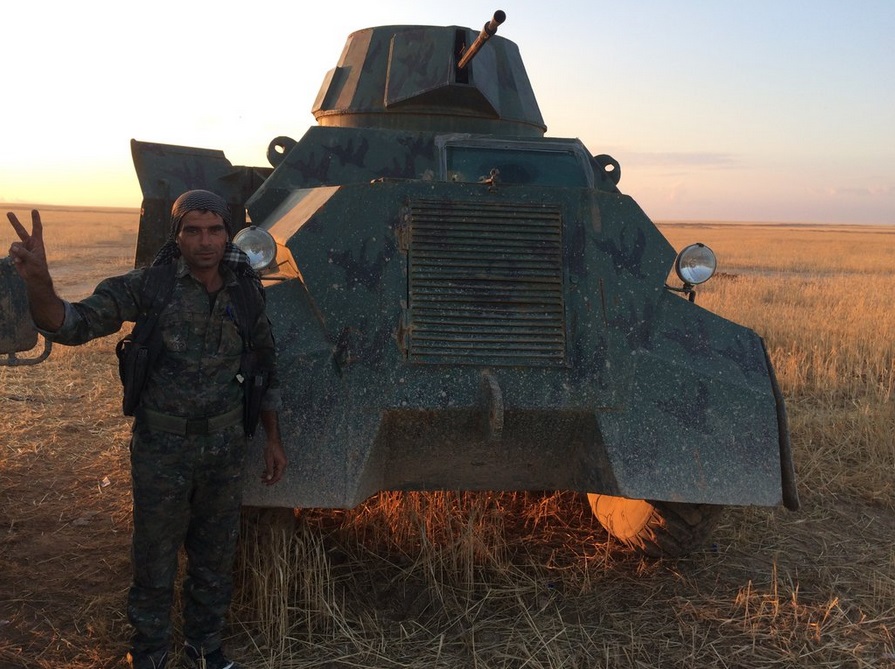
From the twitter page of BBC Middle East Correspondent Quentin Sommerville, here are a couple pictures of improvised AFVs being used in the fight against ISIS in Iraq/Syria.
 According to a US DoD news release, Lithuania is requesting a sale of 84 M 1126 Stryker vehicles armed with 30mm cannons along with associated equipment, parts and logistical support. The purchase is listed at an estimated cost of $599 million. The release states that the 30mm cannon be either the ATK 30mm gun, the XM813 30mm cannon or a European variant with the Remote Weapon Station and 84 M2 Flex Machine Guns. A principal contractor is not listed in the press release although it’s worth pointing out that the Stryker is a General Dynamics product. The US army plans to field Stryker vehicles with a 30mm gun by 2018. The initial US order is for 81 upgunned Strykers to equip the 2nd US Cavalry Regiment based in Germany. Earlier this year it was reported that Lithuania planned to purchase the German Boxer 8×8 armored vehicle. It would appear that the Boxer purchase has been abandoned in favor of the Stryker.
The DoD news release notes that “Lithuania’s acquisition of the Stryker ICV system would represent a major advancement in capability for the Lithuanian Land Forces, filling a vital capability gap that is not currently addressed. The Stryker ICV system would provide maneuverability, speed, and firepower to the Lithuanian Land Forces and enhance Lithuania’s ability to contribute to territorial defense and NATO and coalition operations. Lithuania will have no difficulty absorbing this equipment into its armed forces.” The Stryker would replace the venerable M113 APC that remains in Lithuanian service, initially equipping the two battalions of the ‘Iron Wolf” mechanized infantry brigade.
 Jane’s is reporting that the US Army has exercised an option to purchase an additional 30 sets of M109A7 SPH and the companion M992A3 ammunition carrier. Formerly referred to as the Paladin Integrated Management (PIM) program, the M109A7 features significant upgrades over the M109A6 Paladin by replacing the tracks, transmission, and engine with units common to the Bradley IFV and adding a 600volt power generator and a more advanced projectile ramming system. The contract was awarded on Oct 30 and is worth 245.3 million dollars. This contract for 30 sets of vehicles will bring the US Army’s total number of sets to 66.
For a more detailed history of the M109A7 development, check out this page from Defense Industry Daily.
Click here to read the BAE press release on the contract.
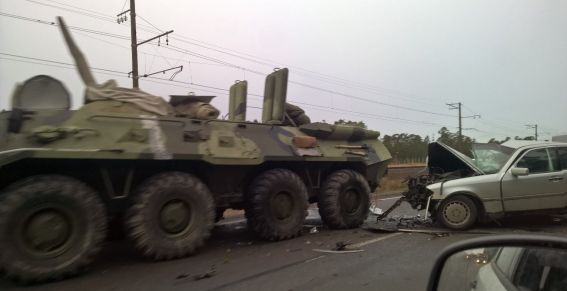
A Mercedes sedan came out the worse in a collision with a Russian BTR APC outside of St. Petersburg on Tuesday. Remember folks, give armored vehicles a wide berth when driving.


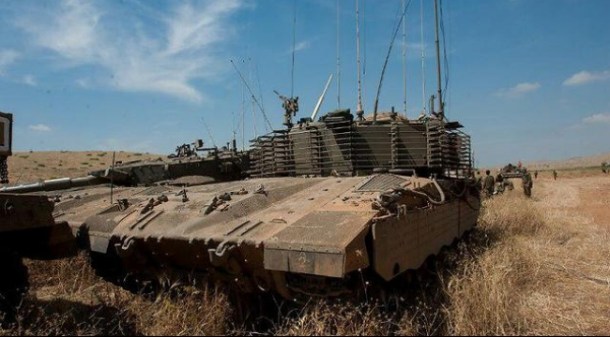
According to ynet news the Israeli Defense Forces have developed an APC based on the chassis of the Merkava II main battle tank. As the IDF has transitioned to the Merkava IV, older Merkava II tanks have been pulled out of service, making them available for other purposes. Israel has a long tradition of converting old main battle tanks into heavy armored personnel carriers rather than scraping or retiring them (see Nagmachon, Achzarit.) The Merkava series is well suited for conversion since its front mounted engine and transmission allows for soldiers to enter and exit the vehicle from the rear in typical APC fashion. The article notes that this Merkava II conversion includes removing the turret and ammunition storage racks as well as adding a rear ramp and a new air conditioning system. Currently, the IDF operates the Namer, a heavy APC based on the hull of the newest Merkava IV MBT. While the Namer will equip front line infantry units, the article states that the converted Merkava II APC vehicles will be issued to specific support forces, including medical, logistical and rescue units. A prototype of the Merkava II APC was fielded by the 7th Brigade’s command staff in an exercise this past spring in the Jordan River valley. It is reported that the IDF was pleased with the vehicles performance.
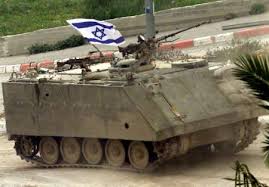
IDF M113 APC, slated to be replaced by 8×8 Eitan APC in 2020’s
Defense News is reporting that Israel’s Tank Production Authority is producing a prototype of an eight-wheeled APC. Named the Eitan, this 8×8 vehicle will weigh nearly half as much as the Namer heavy APC and replace the aging M113 APCs that are still in service. Eitan, which means “steadfast” in Hebrew, is described as incorporating “a new generation of active protection, an advanced turret and a full complement of munitions and sensors.” Serial production of the vehicle is planned for 2020. According to Maj. Gen Guy Zur, commander of the IDF Ground Forces Command, “It may be less good [than the Namer], but it will be affordable and allow us to equip a large part of our force.”
 A new installment in the Panzerwrecks series of books is slated to be released in December of this year. This upcoming book is the 19th in the series and focuses on the Panzers used in Yugoslavia during WW2. The book authors are Lee Archer and Bojan Dimitrijevic and features 151 rare and unpublished large format photographs sourced from around the world. Vehicles features in the book include German WW2 vehicles of course, as well as quite a varied list of “Beutepansers” (captured tanks) and German vehicles in post war Yugoslav service. According to the Panzerwrecks website, this volume will answer the following questions:
Pre-orders for the book start on November 5 and the books ships on December 4.
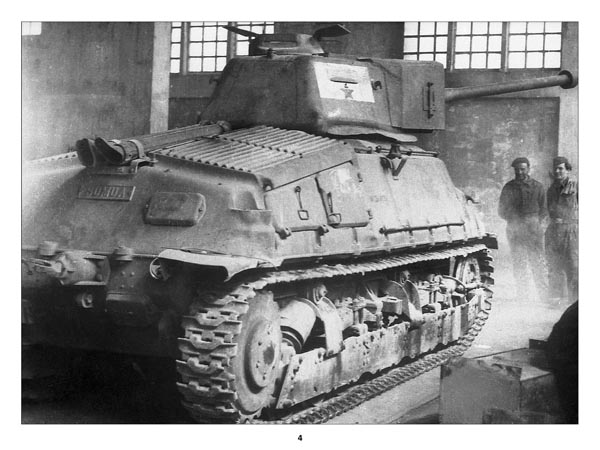
A sample photo gallery can be viewed here. This photo of a modified French S35 is quite interesting.

 Tank and AFV News