In case anyone is wondering what we have been up to the last couple week, we have been busy planning and creating a new video series we call The Tanks of World War II. Here is the first episode. We are working on episode two as we type this. It will feature (hopefully) better green screen keying, we are still working on the format and technical issues a bit. Expect to see the next episode next Tuesday!
Series Description:
This series will be the first to document almost every model of tank that saw service in World War II in roughly chronological order. We will start with the Polish campaign of 1939 and work our way through until we reach the end of the conflict in 1945, with a tentative schedule of 90 episodes. The emphasis of each video will not only be a technical description of the tank, but more importantly, we will attempt to put the vehicle within its proper historical context.
We will try to explain how each tank came into being, looking at the various factors that went into its design and production. Questions such as how did a countries particular military doctrine influence the design of the tank they decided to build? How did their industrial capabilities, or perhaps more importantly, how did their industrial limitations affect the design? And of course, what larger political and strategic demands affected the design, production and introduction of these tank designs?
We will evaluate these tanks as well, doing our best to present a nuanced judgement looking at a variety of criteria. Of course, first and foremost is the combat history of the vehicle. Did it perform on the battlefield as hoped for? Also, we need to look at whether or not the vehicle fit the particular needs of the military force that it was issued to. Was this design a technological dead end or did it provide a basis for future development? And finally, was this particular tank design one that helped shape the outcome of the war, either in a positive or a negative way for its user?
These are the types of questions we hope to answer on The Tanks of World War II. We think the story of these armored behemoths is a fascinating bit of history and we are excited to tell it. If you find these machines as interesting as we do, then please, follow us as we embark on this journey through the The Tanks of the Second World War.
 and
and  .
.


 by Robert Gregory. This is an 80 page softcover book.
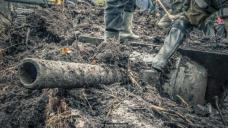 When the German army attacked the Soviet Union in the summer of 1941, tanks were a crucial factor in their initial success. German tanks roared across the Soviet border giving the enemy no time to recover. As the Soviets reeled under the surprise attack, the most powerful German formations swept through what is now Belarus. Huge battles were fought, leaving the land strewn with dead bodies and ruined machines.
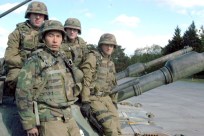 Having spent a lot of time on tanks, I would argue that pursuing technical solutions that don’t account for the human dimension of sustained ground combat is a mistake. The four-soldier crew gives flexibility that three cannot. Pulling local security is a real requirement inside a tactical assembly area. Doing so while maintaining weapons, conducting maintenance, eating, and getting some sleep is already tough. When in radio listening silence you need a runner, and during tactical road marches you need an air guard.
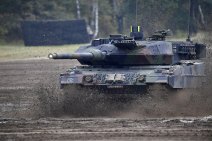 MELBOURNE, Australia ― Singapore is denying it took delivery of Leopard 2A7 main battle tanks from Germany, contradicting a report by a Swedish nongovernmental organization. A spokesperson from Singapore’s Ministry of Defence told Defense News that “no other variants of the Leopard has been acquired” since the country ordered Leopard 2A4 tanks from Germany in 2006.
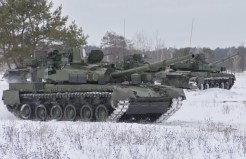 After missing several deadlines over the past few years, Ukraine’s state-run defense production concern UkrOboronProm will now finally complete its long-standing contract to supply its advanced Oplot-T battle tanks to Thailand. In a March 26 press statement, the concern’s director general, Pavlo Bukin, asserted that a final batch of six modern Ukrainian-made armored vehicles had already been produced and successfully tested in the presence of the ordering party.
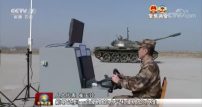 As a part of China’s People’s Liberation Army’s continued modernization efforts, China is now experimenting with converting outdated tank platforms into unmanned combat drones. Footage released to the public last Wednesday on state-owned television shows a Type 59 Chinese tank being maneuvered via remote control, using a steering wheel and dual screened console to manage the tasks of tank operation. Although the video does not say, it seems likely that the two screens represent a navigational view of the front of the tank and a bore-sight view for targeting the tanks main weapons system, a 100mm gun.
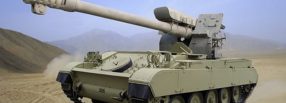 France built the 14.5-ton AMX-13 tank in the 1940s as a combat vehicle light enough to be air-transportable to support paratroopers. France produced and exported thousands of them, which saw action in several Cold War conflicts. They’re still in service in a handful of countries, mostly in South America. The antiquated tanks could still see service for awhile longer. Reports suggest Peru is looking at converting 30 to 40 of its AMX-13s into self-propelled howitzers by swapping out their turrets for Soviet-era 122-millimeter D-30 howitzers.
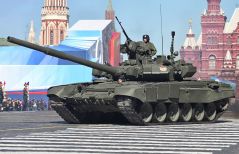 Russian heavy off-road truck manufacturer Ural Automotive Plan has announced plans to establish a local company in Egypt to assemble 400 Russian battle tanks of the T-90S/SK model, according to state-funded Russian news outlet Russia Today. The project depends on whether the mother company in Russia will issue an official authorization for the assemblage in Egypt.
 Tank and AFV News